

what’s cookin’
Ciao, amici. Your hopper is back from her Tahoe excursion, which included a pretty wild drive to South Lake Tahoe through a big storm and snow a little over a week ago. Sis and I cut our stay in Tahoma short so we wouldn’t get stuck in that monster storm that pummeled California last Wednesday. It was horrible to see all the businesses and homes dealing with overflowing plumbing and flooding, especially in the Mission around 14th Street and Folsom; the newly opened Yabani, plus Bageletto, Pink Onion, Baklavastory, and Rainbow Grocery were especially hard hit. Wondering why this literal shitshow keeps happening in this neighborhood? You will find this comic explainer by Mission Local is extremely informative.
Watching the jaw-dropping amounts of water flowing through the streets reminded me of the Biblical levels of rain on New Year’s Eve in 2022, when Rintaro got absolutely hammered with hideous flooding. Last week, fortunately, they fared much better—this story in Mission Local mentions the costly updates and changes they made to try to prevent a redux: “Mishima Brackett said he had to spend about $100,000 for a specially engineered wall to block water coming in from the street, a flood gate for the front door, a check valve to keep sewage water from coming up the drain and an injection pump to push any excess water out into the street.” Since The City’s much-needed sewer upgrade projects will take years (the Folsom Area Stormwater Improvement Project is slated for completion in 2030), take a look at the Floodwater Grant Program for support with installing flood protection measures for your home or business.
The damage wasn’t just in the Mission: over in the Outer Sunset, Devil’s Teeth Baking Company on Noriega also flooded, as well as TUR, JANDii Café Sunset just closed due to flooding (today!), and it’s unbelievable to watch how quickly the water rose last week at Bitters & Bottles in NoPa. I had flashbacks to the acqua alta when I lived in Venice (Italy). Many of these places have been doing major cleanup over the past week—along with other spots in our neighborhoods—so, if you can support their businesses in coming days, that would be super.
Everyone was understandably on high alert after last week’s fiasco. But, SF is exhaling since last night’s storm wasn’t as much of a doozy as initially predicted, and it looks like the peak of the abnormally high king tides and coastal flooding is over, although keep away from the coast through Thursday—over by the Cliff House, Ocean Beach was underwater this morning. Pacifica and Marin County are sadly experiencing major flooding and high surf. I hope everyone stays dry, safe, and drama-free.
This holiday weekend will be a good time to cozy up with some movies. Over the holiday break, I’m planning to watch The Terroirist (about the iconoclastic Randall Grahm), Club Kid, and I need to catch up on The Gilded Age. If you’re looking for some creative inspiration, the Richard Avedon doc is out on Netflix—while it glossed over parts of his personal life a bit too much for my taste, it offers a fantastic visual feast of his vast, groundbreaking, and thought-provoking work.
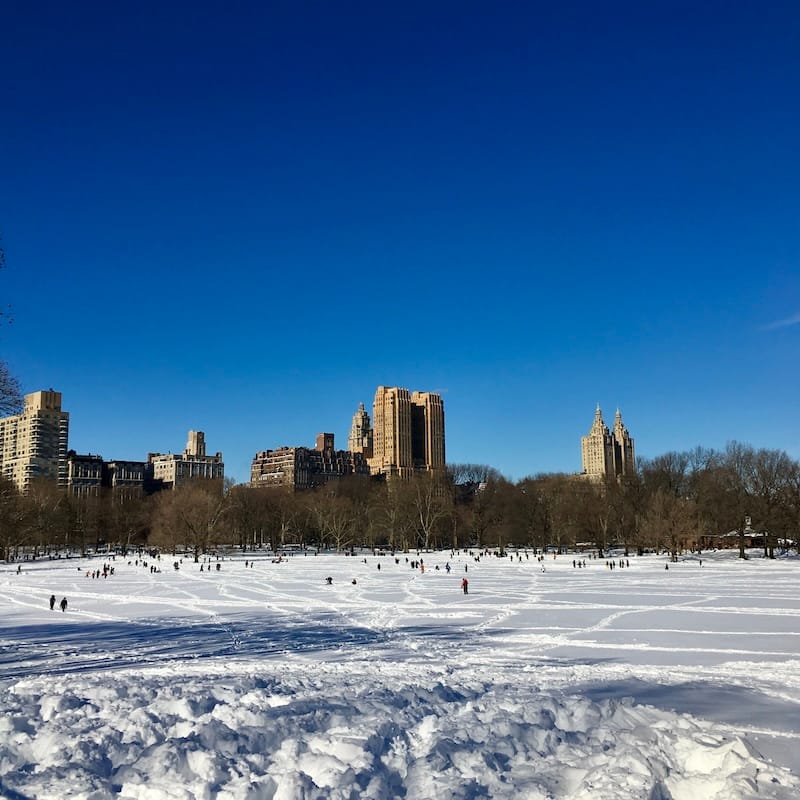
I’m putting together some festive holiday content for you, but in the meantime, can you help me out with some of your favorite things to do in New York over the holidays? I got a pair of tickets for the last night of LCD Soundsystem’s residency at Knockdown Center in mid-December, and, thankfully, my sister was down to join me on a last-minute and quick trip for some festive fun—Biscuit and Champers (our elf personas) are gonna hit The Big Apple!
We’re staying in Brooklyn, not far from Gage & Tollner, so I was thinking about (finally) having a meal there—any thoughts? We have tickets to the Rockettes (our first time!), and we’ll be sure to view the store windows along 5th Avenue, including Bergdorf Goodman and the light show at Saks Fifth Avenue. A friend said we should visit The Plaza before it closes for renovations. Maybe ice skating at Rockefeller Center or Bryant Park? I guess it’s time to try to visit Rolf’s!
Not holiday-related, but I also want to catch the Iris Van Herpen show at the Brooklyn Museum, and I’m thinking brunch or lunch at the Russian Tea Room—I’ve only ever had a Martini at the bar. Our time is limited, but we have a lot of stamina, so thanks for sending any of your holiday faves!
As for SF, this Friday November 27th, for the first time in 16 years, our Union Square is going to have a live Christmas tree (a 60-foot white fir), which is due to light up at dusk (the Bill Graham Menorah will have its first lighting ceremony on December 4th). It’s also the first day you can go get the highly coveted, aged egg nog at Scoma’s!
Speaking of vintage SF restaurants: I thought I was going to write up the history of Julius Castle for you in this week’s column, but since my friend snagged us a reservation for next week, I’m going to wait to write it all up until after I dine there so I can share more details beyond my tour a few weeks ago.
THIS GIVEAWAY WAS FOR SUPPORTING SUBSCRIBERS. Take advantage of the last days of the tablehopper 20th anniversary sale and subscribe now!
This week’s newsletter features a deep dive into the Lucania restaurant concept that just opened last week at the Ferry Building. To understand the name—and to truly appreciate the concept and menu—requires some storytelling about this less-traveled region in Italy and its ancient history. I was talking with co-founder Shelley Lindgren about the project over two years ago, and I first spoke with co-executive chef Massimo Carleo in January—this month, I was thrilled to finally experience some of his traditional Lucanian dishes at the restaurant.
Even though modern-day Basilicata flanks Calabria (where my father is from), and they share similar terrain, and a resilient peasant culture, it’s a cuisine that I was quite unfamiliar with. I have spent the last few days transcribing my many interviews in Italian with Carleo, as well as numerous people involved with the project, while reading recipes in my Calabria e Lucania in Bocca cookbook (it’s rare to find the first edition from 1979—I hope to have my own some day, or, gasp, even a complete set; here’s an English version).
My cat, Fortuna, is so tired of watching me spend days and late nights working on this story at my desk. (I don’t blame her.) It’s a long piece you can read on the plane or the couch this weekend. There are many other projects and news to write about (psssst, I hear the new Pasta Supply Co Cole Valley is open today until 5pmish!—take a look at my sneak peek video here), but Lucania gets the full spotlight this week—grazie mille to the indefatigable Shelley Lindgren, who does so much to honor and increase visibility of Southern Italian gastronomy, wine, culture, and history.
So, let’s hop to it. I’m giving heartfelt thanks for your readership and years of being in community with you! Best wishes to you and yours for safe travels, warm and dry homes, good health, an abundant table, and quality time with your beloveds (much love to those who can’t be with us).
Wishing you a restorative Thanksgiving holiday.
~Marcia
the chatterbox
The Newly Opened Lucania at the Ferry Building Tells Centuries-Old Stories of Southern Italian History, Cuisine, and Culture
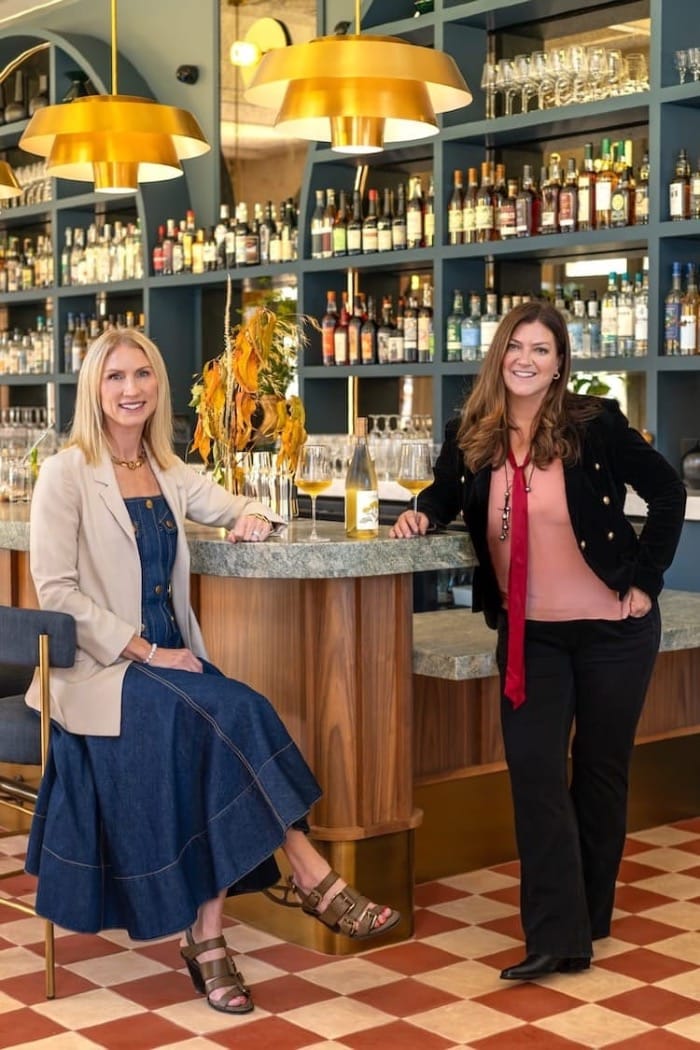
In the previous tablehopper newsletter, I wrote about a preview dinner I attended a couple weeks ago at Lucania at the Ferry Building (thanks to Hot Chefs), and I just returned for dinner with friends this past weekend (on the restaurant’s third night) so I could get to know it even more. This soulful, Southern Italian restaurant from DOC Hospitality (A16) and Tansy Wines co-owners/founders Shelley Lindgren and Kitty Oestlien opened last Thursday November 19th, but has been years in the making. Lucania takes over the former MarketBar location, which closed in the beginning of the pandemic in 2020.
Lucania means “land of light,” and refers to a historical territory of Southern Italy that centuries ago included what is now the region of Basilicata, as well as parts of Calabria, Campania, and Puglia; survey some maps and read the history of the ancient area here. I’m grossly simplifying centuries of history here, but during the Bronze Age, this fertile area was called Oenotria (“the land of vines”), home to the indigenous Italic group, the Oenotrians. It was later known as Magna Graecia (“Greater Greece”) in 8th century BCE, when Greek settlers began to colonize the area, bringing their Hellenic civilization, culture, architecture, and language. Jump ahead a few centuries, and according to StoryMaps: “Lucanians, as an indigenous ethnos, aren’t readily conspicuous until the 5th century.”
Today, the people of modern-day Basilicata still refer to the region as Lucania, and call themselves lucani. For reference, Basilicata borders Campania to the west, Puglia to the north and east, and Calabria to the south, and touches the Tyrrhenian Sea and Ionian Sea (in the arch of the boot). You have likely heard of Matera—a UNESCO World Heritage Site in Basilicata—said to be the third-oldest continuously inhabited settlement in the world, famed for its Sassi districts of cave dwellings and churches carved into limestone cliffs and hillsides. (Some of the design elements in the restaurant are inspired by this ancient site.)
Let’s fast-forward to 2019 [whooshing sound], when then-Consul General of Italy, Lorenzo Ortona, hosted cultural events to celebrate Matera, the European Capital of Culture in 2019, and that’s when Shelley Lindgren met Lorenzo’s favorite chef in Basilicata: chef Massimo Carleo, a Lucanian from Potenza. Later, Carleo was paired with A16 for a collaborative dinner in SF, highlighting dishes from Matera, and a friendship was born.
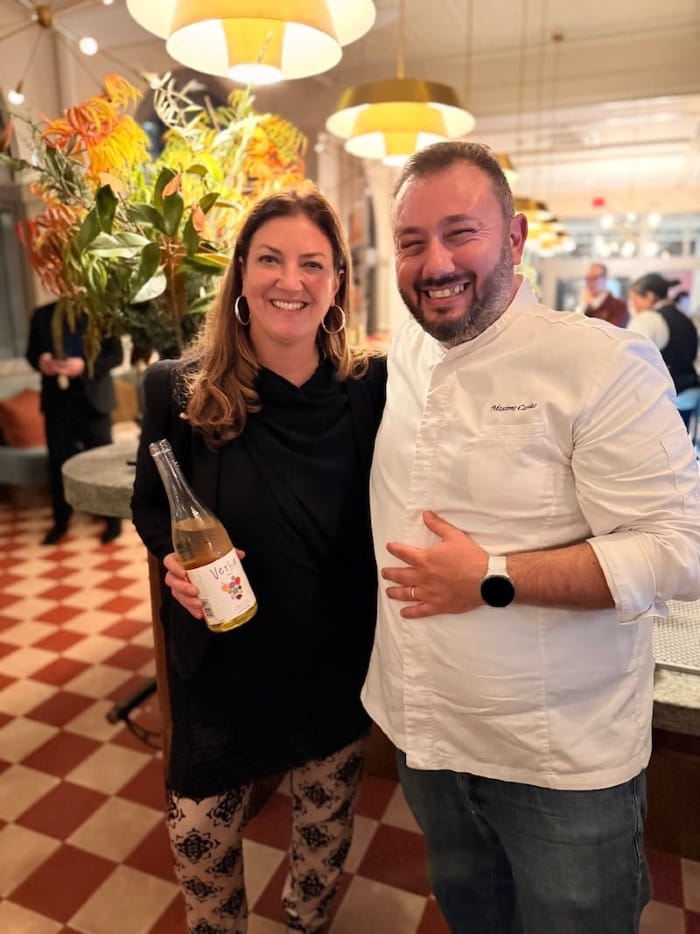
Lucania is a natural segue for Shelley, who was so dedicated to representing the cuisine and wine of Campania when she opened A16 on Chestnut Street 22 years ago, and now she’s voyaging further east and south to celebrate the ancient Lucania. How fortuitous that while she was building the concept and culinary team, chef Carleo became available to help faithfully transport the depth of authentic flavor, history, and soul that define Lucania to San Francisco.
Carleo’s culinary background most recently includes two years as executive chef of Palazzo Gattini, a five-star property in Matera, and he previously had his own upscale and elegant restaurant for 10-plus years (Massimo Carleo Restaurant) in Potenza. He has cooked all over Italy (Castrovillari in Calabria, Gubbio in Perugia, Roma, Selva di Val Gardena in Alto Adige), as well as in London and Paris; his family has also operated a pasticceria in the historic part of Potenza for the past 40 years.
While Carleo has 26 years of culinary training, education, and experience—with the majority of that time spent working in refined dining—at Lucania, he wants to honor the soulful and humble dishes of his upbringing. Almost a year ago, in our first conversation over WhatsApp while he was living in Italy, he described traditional Lucanian dishes to me, from crapiata to pane cotto. He explained Basilicata is such a mountainous and rugged area, so its ancient contadina cuisine remains relatively untouched and isn’t widely known.
He poetically noted in a series of texts to me: “The cuisine of Lucania/Basilicata is one of the most authentic expressions of the Italian peasant tradition. It is an essential, spicy cuisine—‘humble’ in the kindest and noblest sense of the word—based on top-quality ingredients derived from the land and from pastoral traditions. To truly understand the cuisine of Basilicata, one must envision it as a product of resilience and geographical isolation. Unlike other coastal regions, Basilicata remained enclosed for centuries within its mountains and clay badlands, developing a culinary identity untouched by external influences—it has remained ‘pure.’” (You can only imagine how beautiful this all sounded in Italian.)
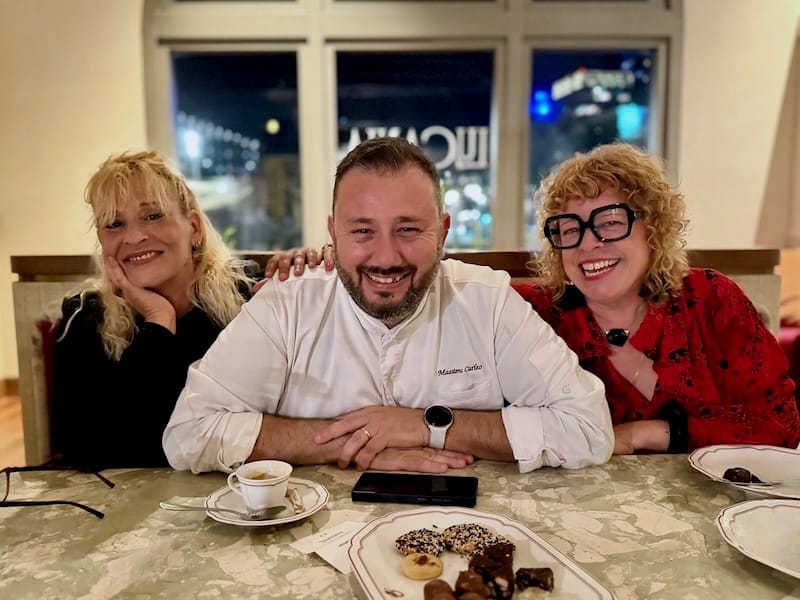
It’s a great point of pride for Carleo to be representing the lesser-known cuisine of this ancient region, shepherding his traditional family recipes and techniques to the tables of this gorgeous restaurant in the Ferry Building, one of the culinary temples of San Francisco. (He’s beaming.) He’s giving some of the dishes a bit of a contemporary presentation, and integrating local ingredients, while staying true to the original flavors. Working with co-executive chef Yosuke Machida (A16’s executive chef), he’s learning where to source local and seasonal ingredients (it helps to have the Foodwise farmers market at your backdoor), while highlighting artisanal ingredients from purveyors he knows in Basilicata, like slow-dried pasta from Pasta Caterina (made with Lucanian wheat and bronze dies), olive oil, salumi and cheeses, and Gaudianello water.
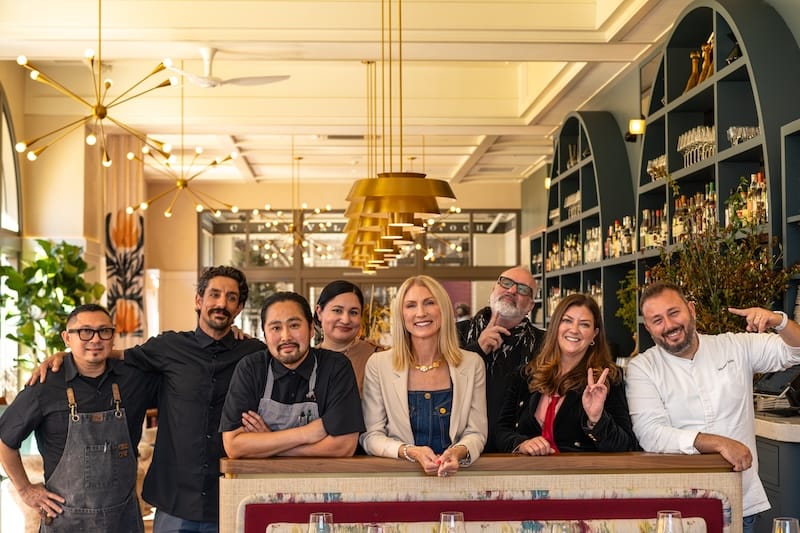
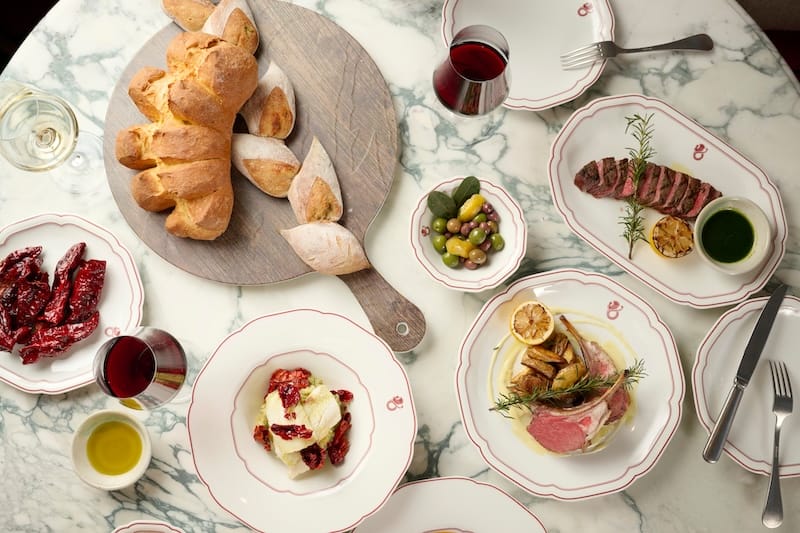
Classic Lucanian ingredients and dishes reflect the rugged terrain, like horseradish, legumes, grains, beans, slow-cooked lamb stew in terracotta pots, foraged potatoes and carrots, lots of vegetables and wild greens, and a focus on preservation, which includes cured meats, like capocollo and Lucanian sausage (salsiccia stagionata), and aged cheeses, like pecorino, caciocavallo, and Canestrato di Moliterno from Potenza.
The all-day menu is quite extensive, so it’s going to take a few more visits with friends with good appetites to make my way through it. Try to dine with a small group for your first visit—family-style dining is the way to go. Don’t be intimidated by all the Italian words and any unfamiliar ingredients—you’re traveling to a new region here! Even with my half-Calabrese heritage, I had much to learn.
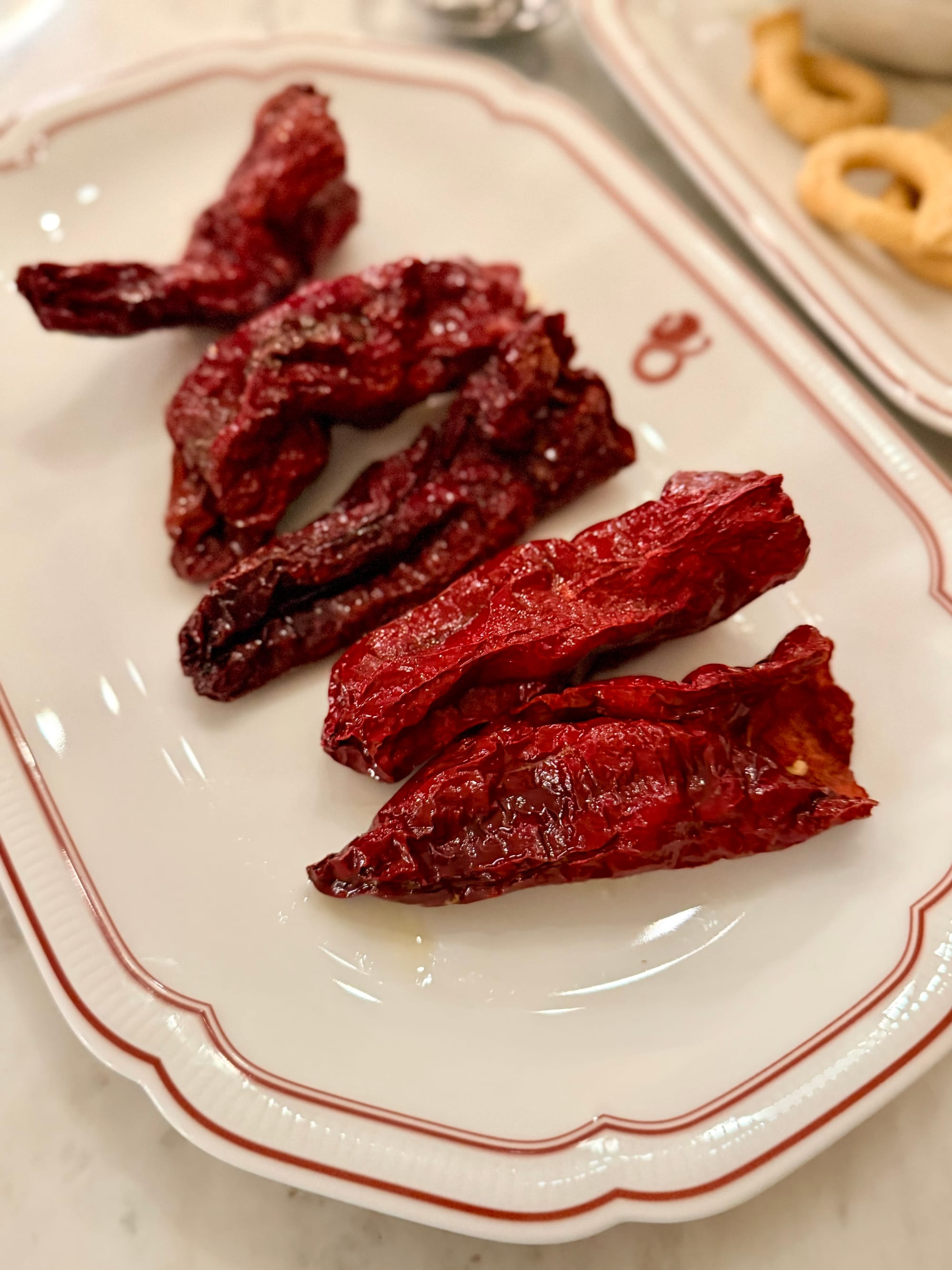
You’ll see a logo on all the dishes and espresso cups, a serpent and lion figure that is the Lucanian chimera. It’s from the flag of the historical region of Lucania, originally sourced from a fragment of a shield excavated from a tomb. I suggested to Massimo that they should put the chimera next to the most iconic Lucanian dishes on the menu, like the peperoni cruschi (fried Senise peppers; $11), which are a must. You eat them with your hands like a fried chip, and they add a nice accent to the simpler dishes. They aren’t very spicy, so don’t be leery—it’s a sweeter pepper that is air-dried, so it develops a smoky-earthy-savory flavor that reminds me of Aleppo chile, but again: not spicy.
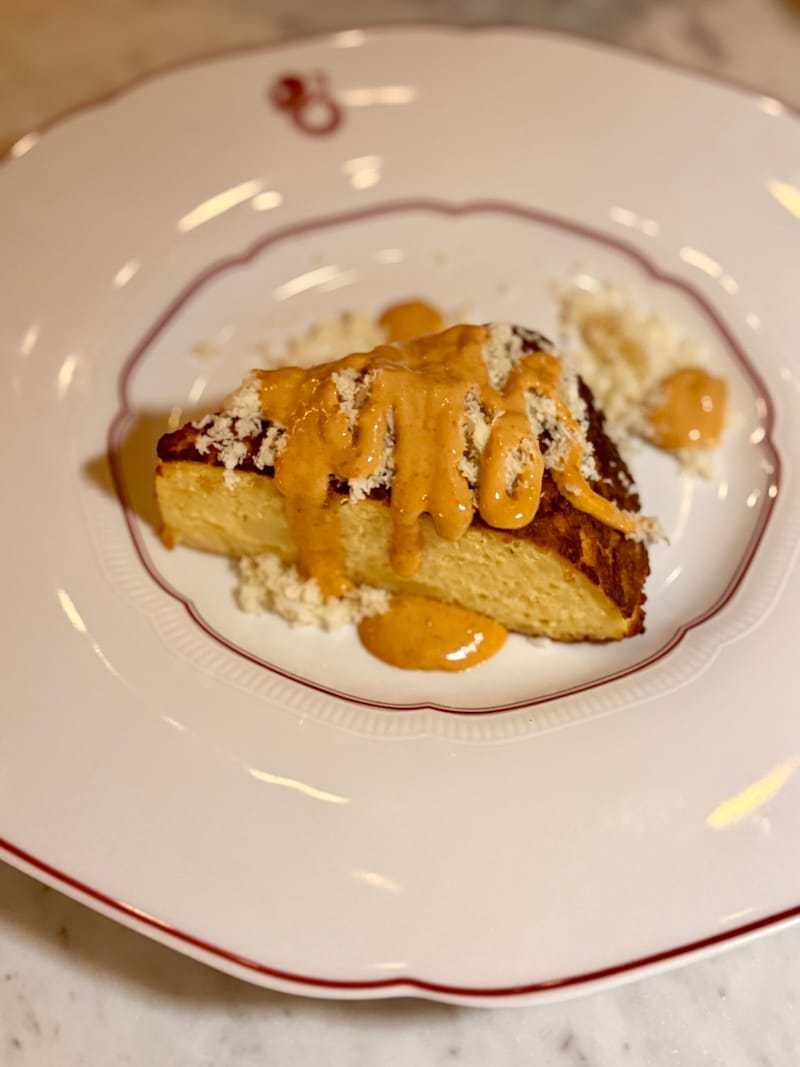
Another traditional Lucanian dish is the rafanata lucana ($16), a frittata made with eggs, cooked potato, and a kick of horseradish and pecorino lucano (both are in the batter and grated on top), plus a squiggle of roasted pepper aioli. It has such a unique, punchy flavor, and is good to share (although I could see myself ordering a wedge solo alongside a salad for lunch).
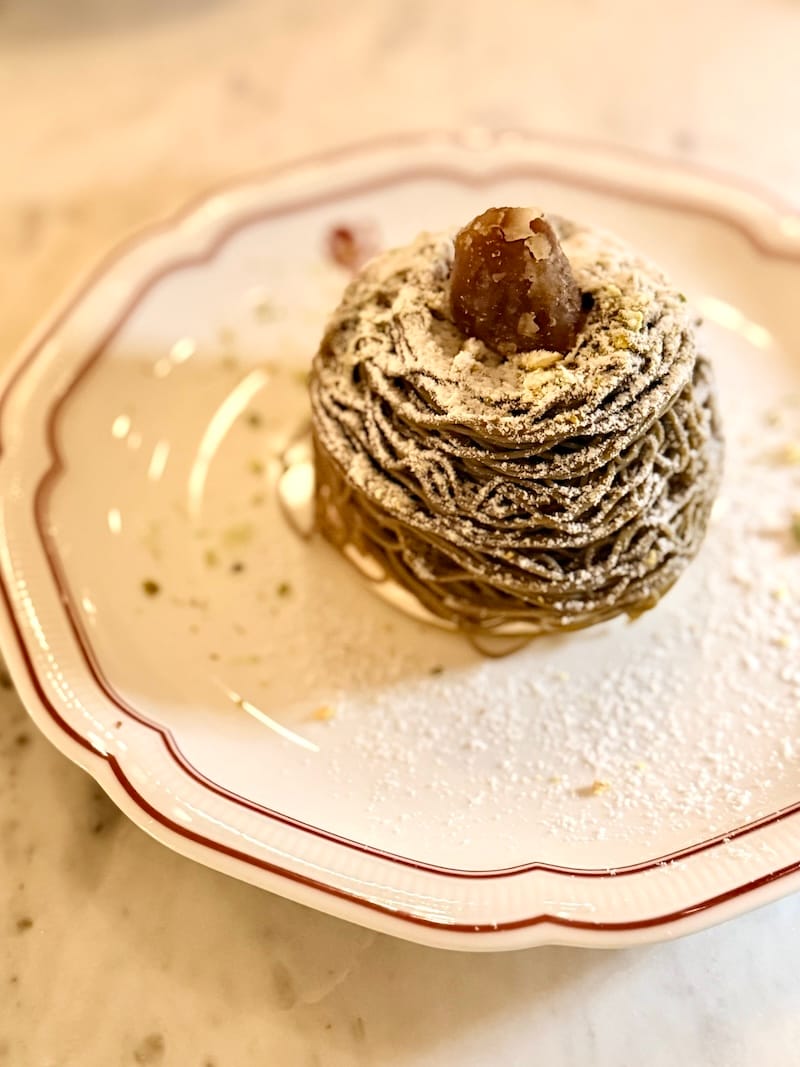
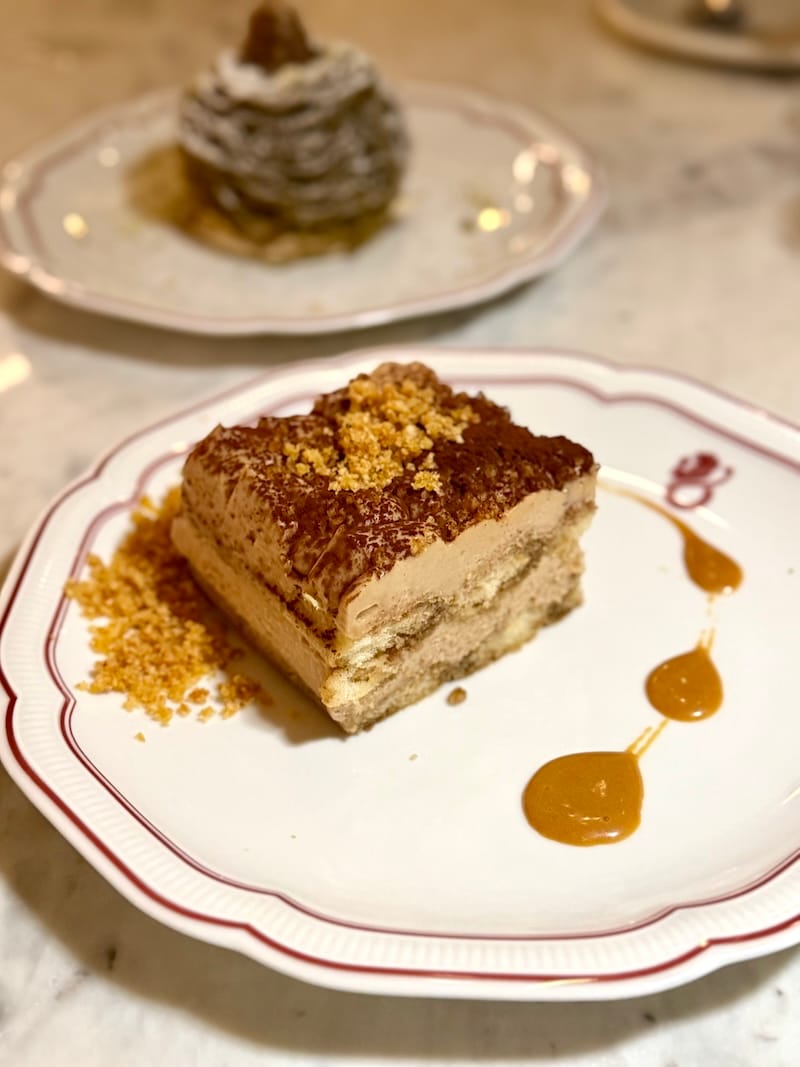
Dolci: Monte Bianco and tiramisù nocciola. Photos: © tablehopper.com.
You can end your meal with a plate of Lucanian cheeses, or dive into dessert, like the elegant Monte Bianco with pistachio and chestnut cream from pastry chef Charlie Guyard, plus the creamiest panna cotta, tiramisù nocciola with hazelnut praline, and coccola (mignardises) from pastry chef Anna Piazza—you can also order the treats to go and nibble on the panforte and truffles later.
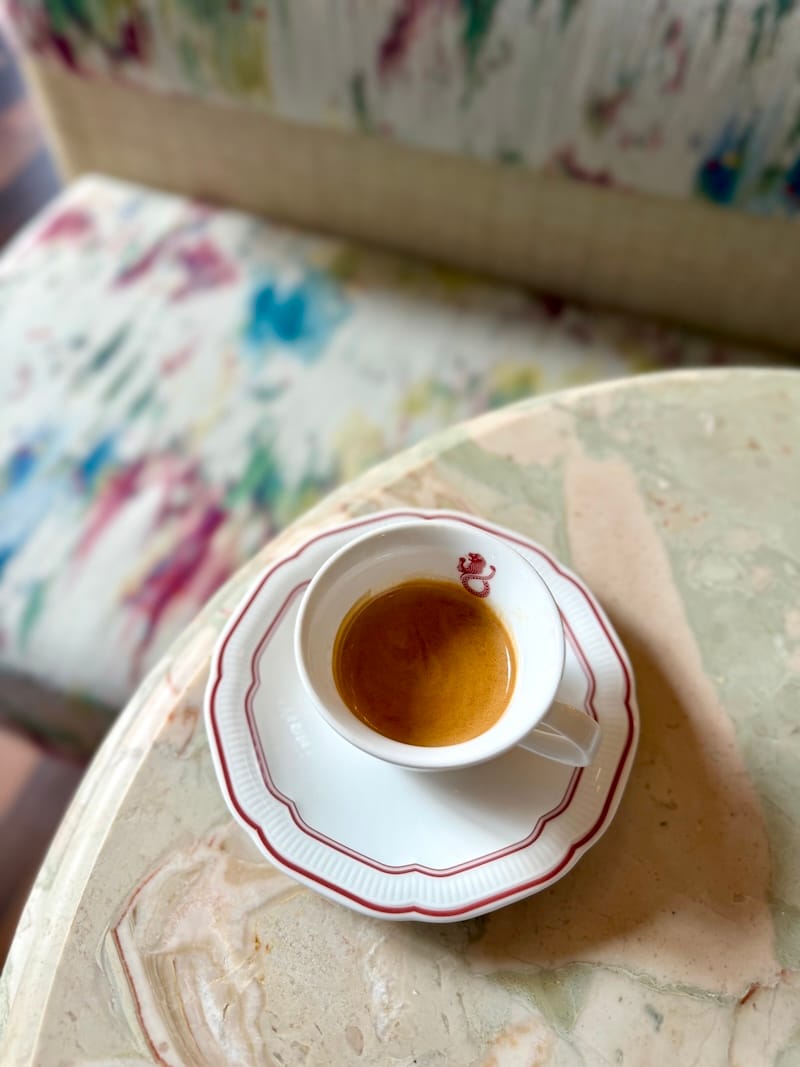
Do you want to pretend you’re Italian and order an espresso after dinner? You should. They worked with Postscript on a special Lucania blend, with Southern Italian depth (there’s also decaf).
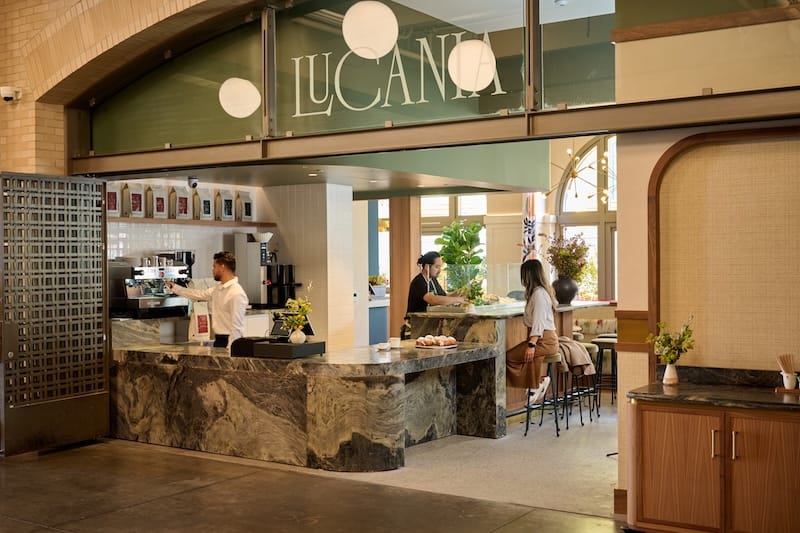
Come by for espresso service in the morning (8am–11am)—they added an additional bar (a combination espresso bar and raw bar) that opens onto the Ferry Building Marketplace. Grab a seat in the front lounge area with your cappuccino and a cornetto.
Shelley’s wine list is focused on Magna Graecia, highlighting Southern Italian regions (Basilicata, Campania, Calabria, Puglia), plus Sicily and Sardinia, with a few selections from the north (like a Franciacorta) and central Italy. There are three aglianicos from three different regions, and I love seeing four bubblies by the glass. Two of Shelley and Kitty’s Tansy wines are on tap (their falanghina and nero d’avola); wines by the glass are also available in carafe (250ml and 500ml—for reference, a standard bottle is 750ml).
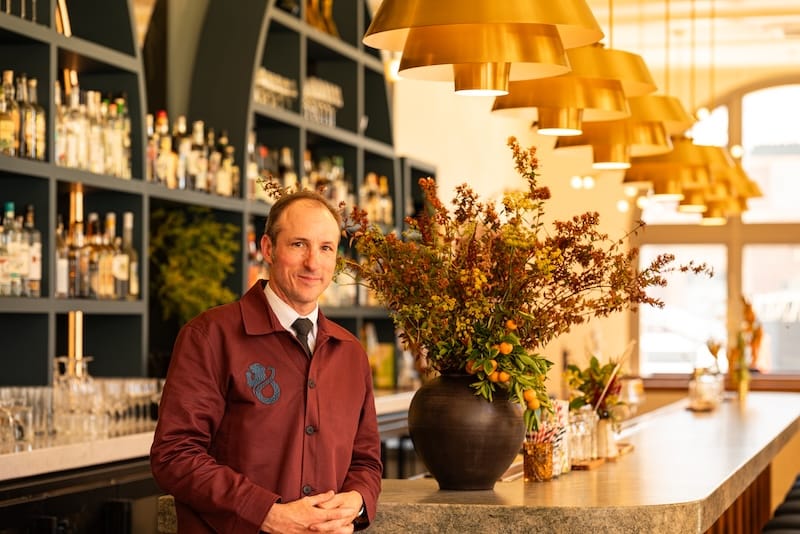
Just as Shelley is committed to sourcing wine from sustainable and smaller grower-producers, bar director Craig Lane mirrors that philosophy with a similar ethos honed from his years at Bar Agricole, like agricultural traceability and transparency of ingredients. For example, he’s using a limoncello and finocchietto from Amalfi that are made with real cane sugar instead of beet sugar. He has been on the hunt for Southern Italian amari (I’m excited he’s carrying Joachim from Calabria), and you’ll recognize the contadina on the Amaro Lucano bottle.
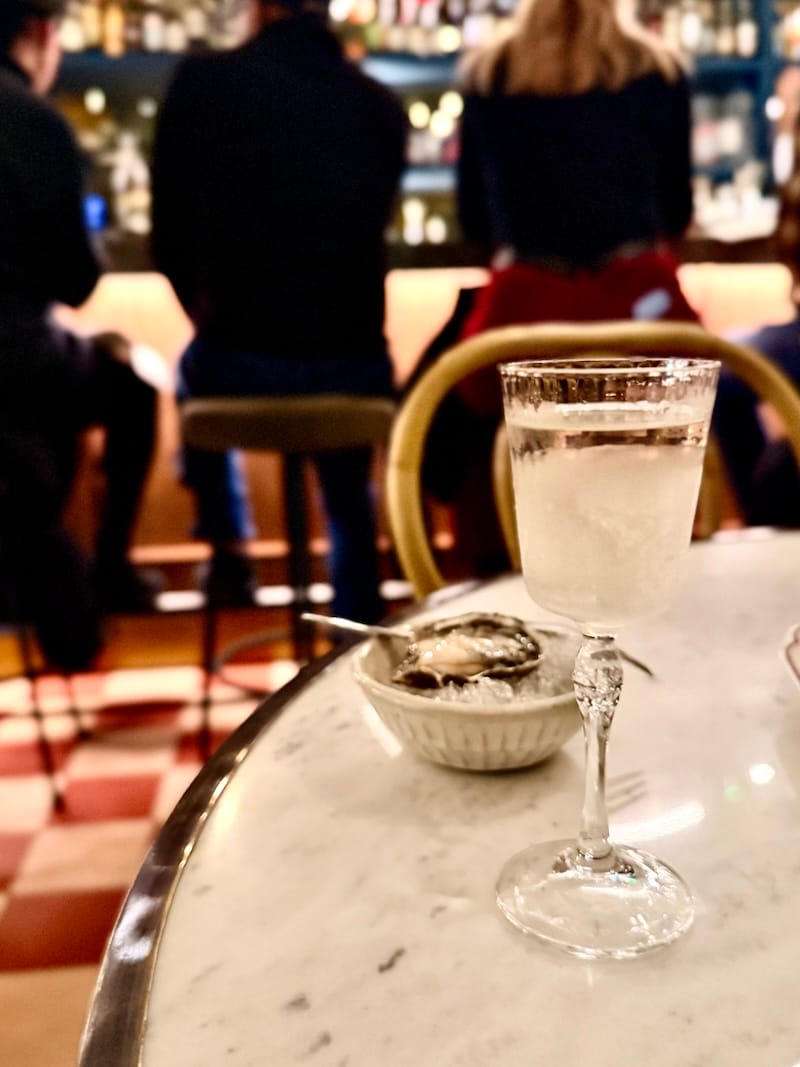
Start your evening (or lunch!) with the sea salt Martini ($9 for 2.5 oz.), fresh from the freezer, inspired by the frosty-cold dry gin Martini served at Harry’s Bar in Venice.
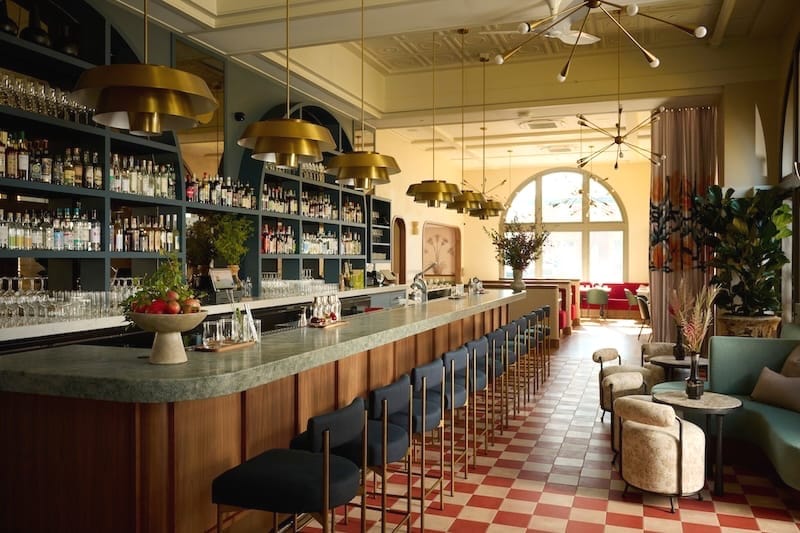
The 3,000-foot-space was massively transformed, and it actually has two new bathrooms that were installed (a longtime scarcity at the Ferry Building Marketplace). Designed by Mariana Velásquez, the 100-seat dining room has a dynamic mix of booths, banquettes, and round tables in different styles and colors. There are many textures from the upholstered seating and wall covering, plus lots of round edges, soft pillows, pleasing colors (from the aglianico red in the booths, to the sea green curving banquettes), different tones of marble and stone surfaces, and a checked tile floor that looks like it’s from a 200-year-old villa. It feels warm, feminine, elegant, and welcoming: Old World, but New World.
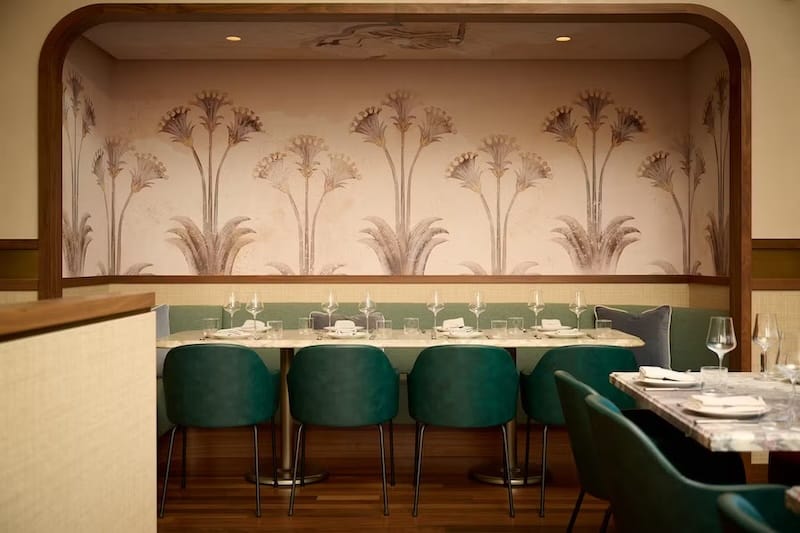
I can’t wait to host a dinner at the table in a back nook that can seat eight, lined with wallpaper inspired by frescoes of the Sassi in Matera. There are also large floor-to-ceiling curtains with Lucanian artwork that can be used to cordon off sections of the dining room for semi-private functions.
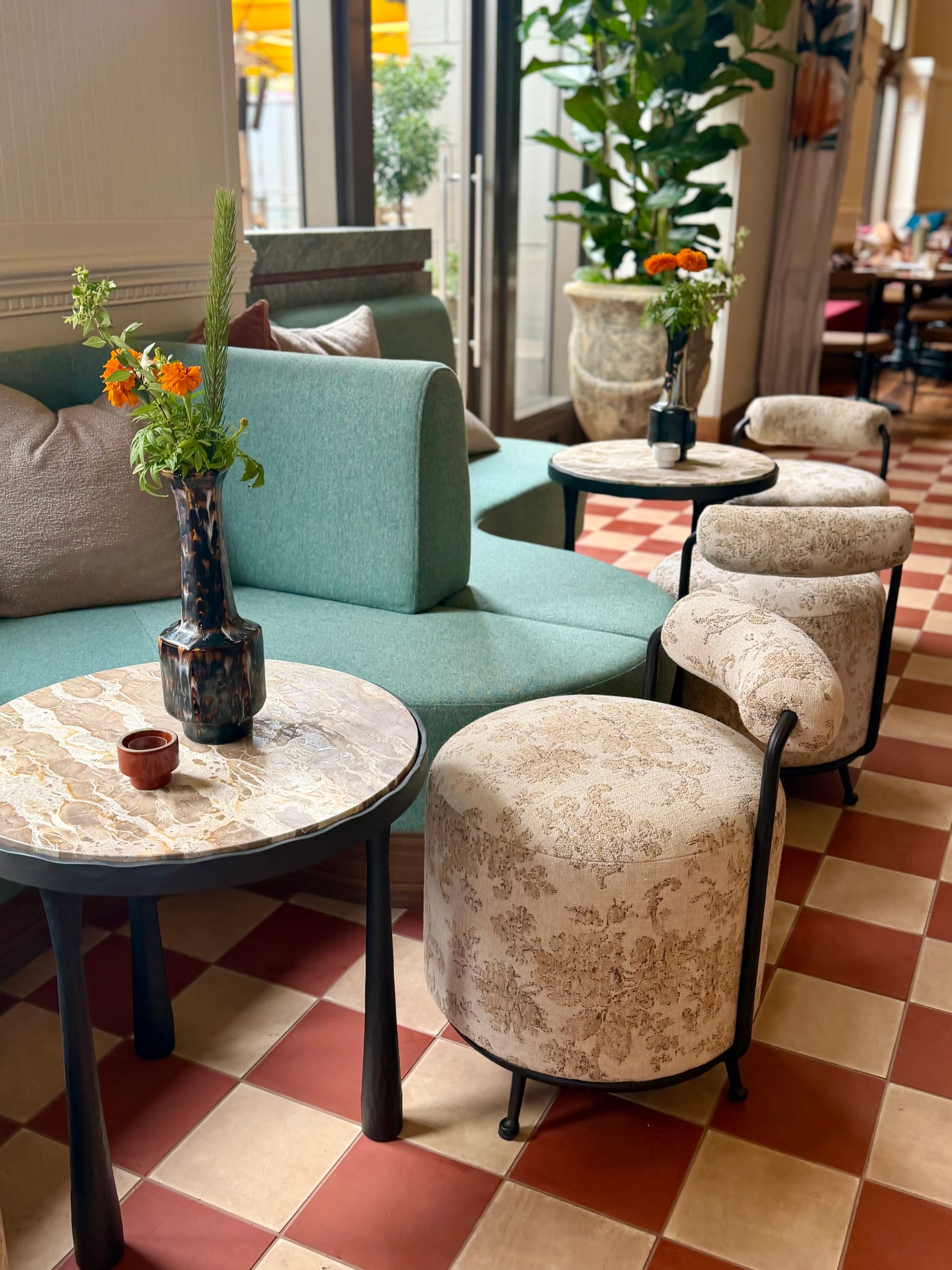
The space is quite lovely during the day, with natural light spilling in from the tall, arched windows, while at night, you’ll see The Bay Lights twinkling through the windows. They’re still dialing in the lighting and vibes in the front, so I’d request a table in the back (there are some fabulous booths that seat six), or flanking the bar.
The central part of the concept is the spacious patio, which is as big as the restaurant, an all-day space designed to feel like you’re sitting in a piazza, whether you just want to pop by for an afternoon espresso, a pizza for lunch, a spritz with friends after work, or a full dinner with friends.
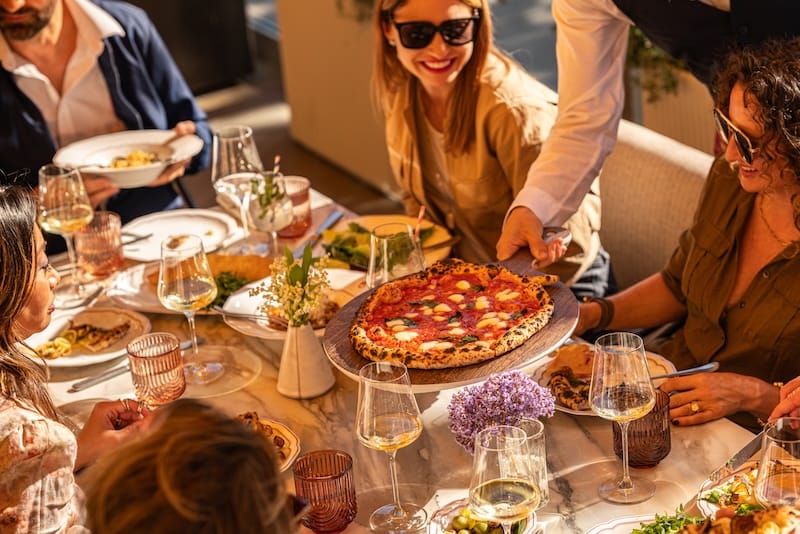
There are 125 seats at an eclectic variety of tables and seating, including banquettes tucked along the building in a pink-and-white candy stripe; round tables with bent-cane, bistro-style chairs that are well-suited for dining; and low-slung patio furniture built for hanging out over spritzes (and people-watching on the Embarcadero promenade).
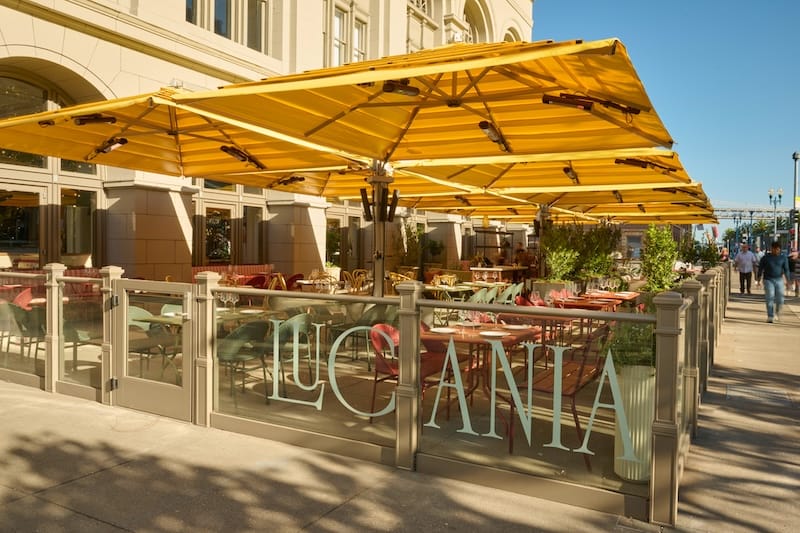
For now, Lucania is open for dinner from 5pm–10pm. Starting Friday November 27th, hours will be daily 11am–10pm. Reserve here. 1 Ferry Building, suite 36.
Last-Minute Spots for Thanksgiving
We all deserve a slow and not-soggy week, a truly Happy Thanksgiving. If you’re unexpectedly staying in town and looking for somewhere to go:
the starlet
As if you couldn’t adore him even more…I loved reading this report in SFGATE about Pedro Pascal’s visit to Tosca. He’s a real one.
Happy Thanksgiving. 🥧 I’m grateful for your readership. 🥂